The business need.
A store needs a clear record of stock, purchases and sales. Owner access and a reliable data flow need to be established before expanding the system.

A practical daily workspace for medical store inventory and sales.
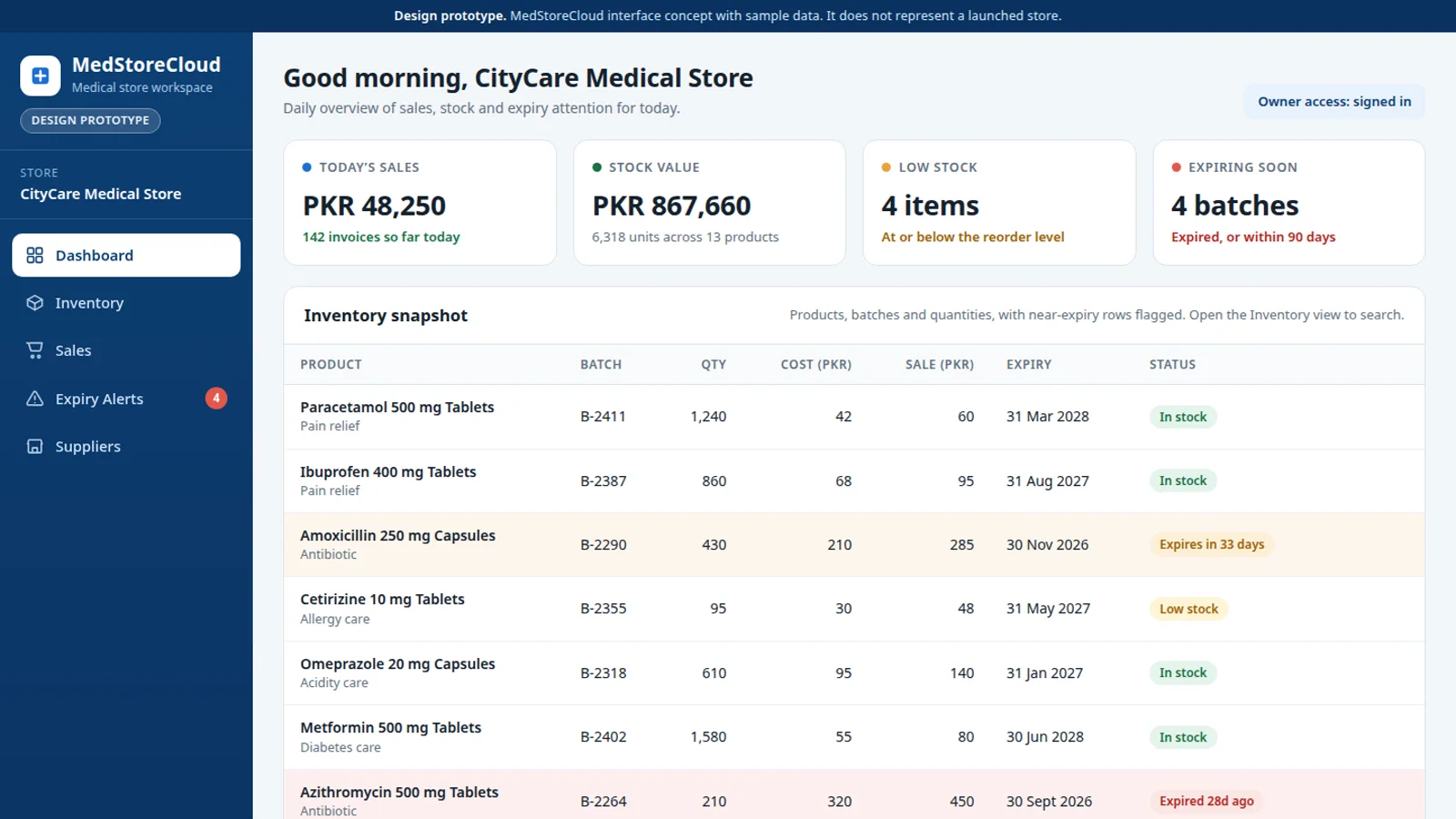
Project image supplied by CH Naveed Ashiq.
A store needs a clear record of stock, purchases and sales. Owner access and a reliable data flow need to be established before expanding the system.
A medical store SaaS project using a MongoDB-backed architecture, starting with owner access and a focused daily operations workflow.
Protect owner sign-in before exposing operational data.
Organise products, batches and quantities.
Connect incoming stock and sales with inventory.
Useful daily activity views as core modules are completed.
Connected steps. A clearer daily process.
Full-stack planning and development. The visual is an illustrative interface concept; it does not represent a launched store or verified operational results.
Next step: Finish database connectivity and verify authentication and core inventory workflows before release.
MedStoreCloud is an in-development medical store management concept, not a claim of a live, production-tested pharmacy system. The initial scope focuses on an authorised owner's access, product records, stock movements and a clear view of purchasing and sales. Before adding complicated reporting, the underlying data needs to remain consistent when products are received, sold, edited or corrected.
A useful inventory flow should identify products, quantities and the reason stock changed. Future requirements may include batch or expiry information, but such features should only be described as complete after they are implemented and tested. The next practical checks are whether updates affect the expected record and whether mistakes can be traced and corrected.
Store information can be operationally sensitive, so a clear authentication and authorisation design matters. Before exposing purchasing and sales data to additional users, the application needs verified account access, appropriate permissions and checks against accidental disclosure. A visual sign-in screen alone is not a security implementation.
Core database connectivity, authentication and inventory workflows still need completion and end-to-end verification. Any deployment should test normal stock changes, invalid input, concurrent updates and recovery from failed requests. Project screenshots describe the intended experience, not proven business results. This approach keeps the case study useful while clearly separating planned features from working functionality.
Tell me which workflow you would like to improve.