The business need.
Orders, material purchases, production and stock affect one another. Tracking them separately makes it harder to see what is available and what needs doing.

One workspace for a bag business: orders, stock and production.
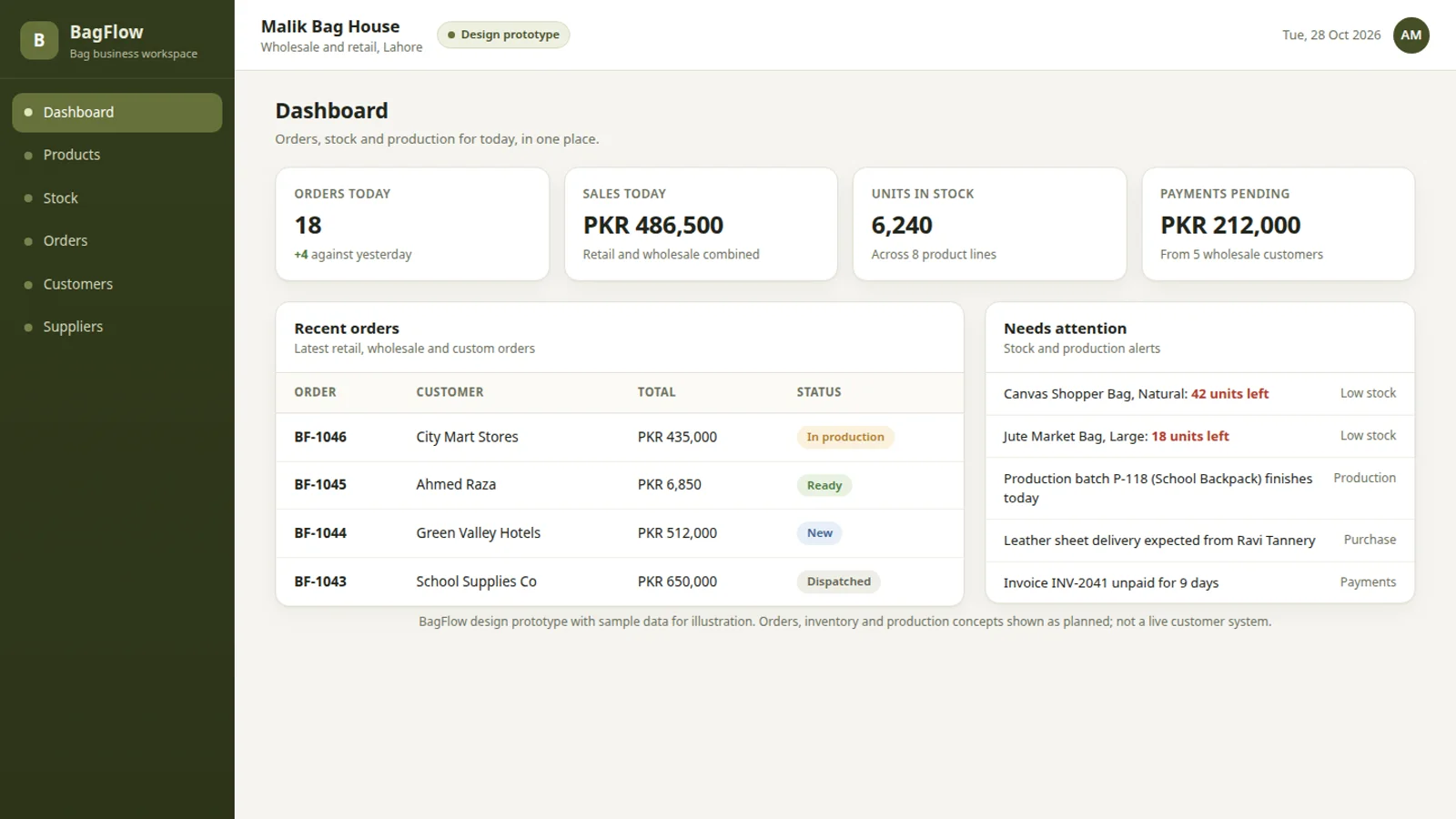
Project image supplied by CH Naveed Ashiq.
Orders, material purchases, production and stock affect one another. Tracking them separately makes it harder to see what is available and what needs doing.
A business workspace designed to connect orders, inventory and production, with permissions for different daily responsibilities.
Retail, wholesale and custom orders, with checkout and payment records.
Follow stock through purchases, production, sales, returns and adjustments.
Connect raw materials, suppliers and production.
Bring expenses, payments, invoices and operational reports together.
Connected steps. A clearer daily process.
Product planning and full-stack development. This portfolio interface is an illustrative concept, not a screenshot of a launched customer system.
Next step: Connect and verify the database, API flows and individual modules before production release.
BagFlow is an in-development workflow concept for a bag business where purchases, production, sales and stock need to tell the same story. A useful first release should not merely show a stock total. It should explain what caused each increase or decrease, who recorded it and which order, purchase or production step it belongs to. These are proposed requirements rather than claims that every workflow is already live.
When material arrives from a supplier, record the quantity, unit, reference and receiving date before updating available stock. The same principle applies to finished bags returned from production. Separating raw material from finished goods prevents a single number from hiding shortages. A receiving correction should be traceable instead of erasing the previous entry.
For example, a delivery of fabric should increase the fabric balance but not the count of finished bags. A later production entry may decrease the fabric balance and increase finished stock. Those two changes should be connected by an identifiable production record.
Dispatching bags for a customer order should reduce available finished stock using the quantity actually shipped, not merely the quantity requested. A return may require inspection before it becomes sellable inventory again. Damaged products and counting differences need separate reasons so the owner can distinguish normal sales from stock adjustments.
These records can later support order status, purchase planning and reports. Without a reliable movement history, a colourful sales chart may look convincing while relying on incorrect quantities.
Core testing should include duplicate submissions, incorrect quantities, cancelled transactions and two people updating the same item. Users need understandable validation messages and permission checks for sensitive changes. The next development milestone is to connect purchases, production and dispatch to consistent stock records, then verify reports against real test transactions.
BagFlow remains a project under development. Screenshots and previews show the intended direction, not audited inventory results or a production deployment.
Tell me which workflow you would like to improve.